

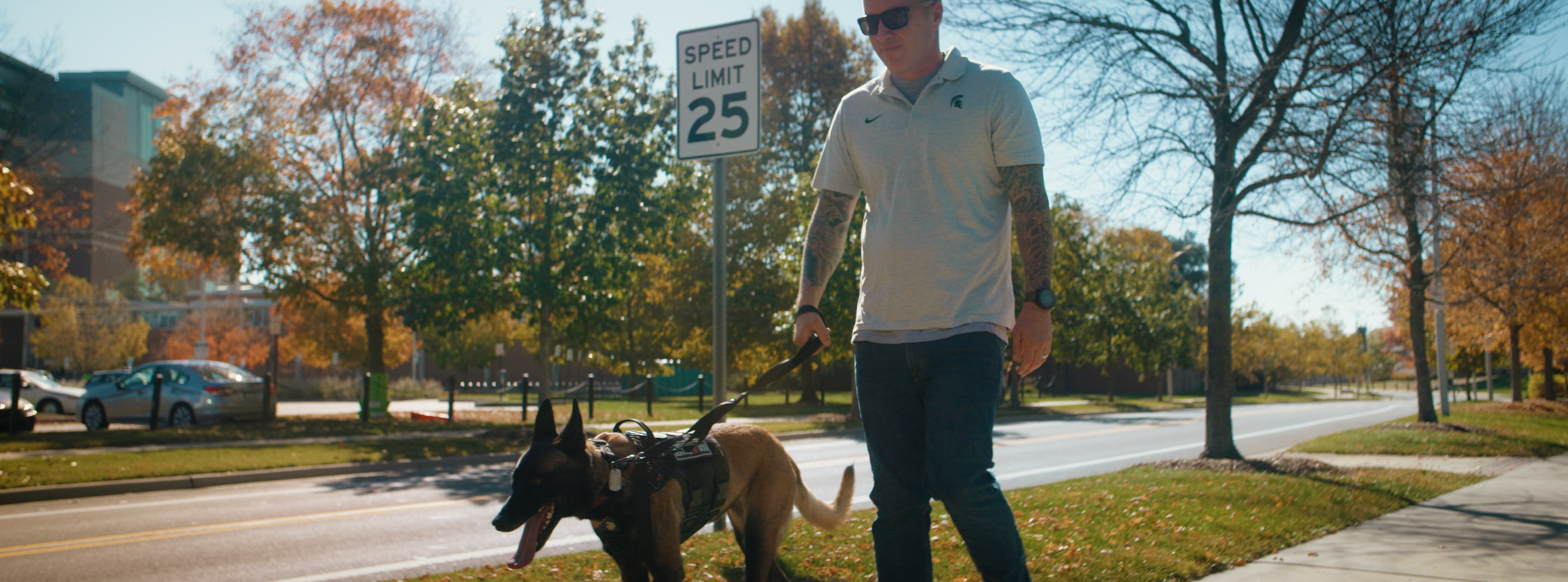
The Marine Corps veteran’s bond with his service dog inspired a children’s book about post-traumatic stress, compassion and the wounds people cannot see.
For Kevin Thompson, support can look like a dog picking up a set of dropped keys, guiding him out of a crowded store or waking him from a nightmare.
Athena, his Belgian Malinois service dog, has learned to help with each.
A Marine Corps veteran and 2016 graduate of Michigan State University’s School of Social Work, Thompson has worked through the physical and emotional challenges that followed his military service. For the last five years, Athena has become a partner in navigating that life—and the inspiration for a children’s book that helps explain why someone might need support even when they appear to be doing fine.
“The thing I would like people to know when they see Athena and I is that not all wounds are visible,” said Thompson, “and that just because I look okay on the outside doesn’t mean that I’m not struggling.”
Learning to work together
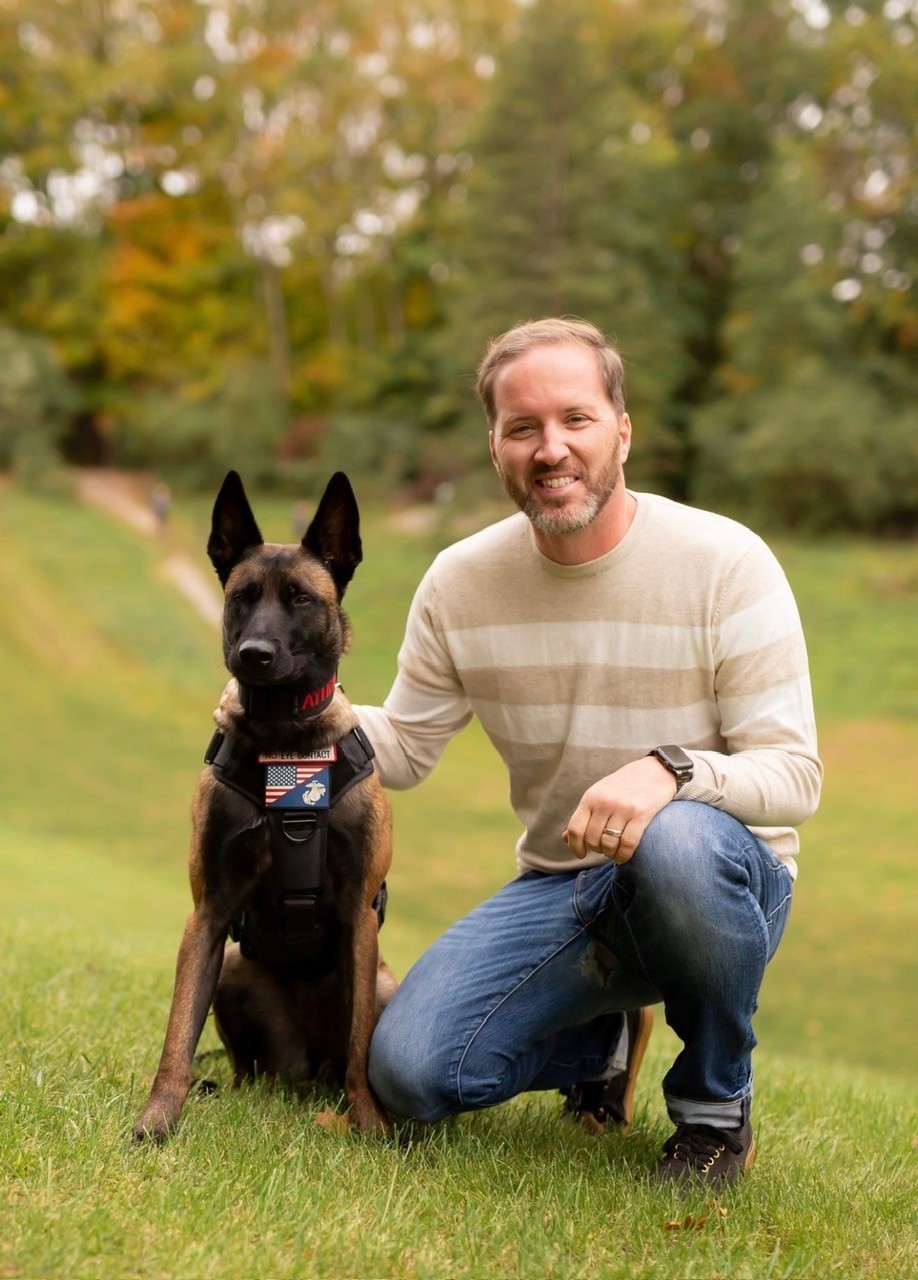
Before Athena, Thompson tried different programs and treatments to address his mental health. He had seen Belgian Malinois working during his military service and was interested in their capabilities.
After researching breeders, Thompson and his daughter traveled to Pennsylvania to meet Athena. They brought her home as a puppy and began working on basic commands and obedience.
Later, they enrolled with Blue Star Service Dogs for training tailored to Thompson’s needs. That process required both of them to learn: Athena needed to understand her tasks, and Thompson needed to understand how to communicate with her.
Today, those lessons help them navigate situations that can otherwise be difficult.
When bending down is painful, Athena can retrieve his wallet, keys or a dropped debit card. If he experiences a panic attack in a store, he can give her a command to guide him toward the exit.
At night, her training helps interrupt the nightmares that once regularly disrupted his sleep.
“One thing that Blue Star taught Athena was how to detect and wake me up from nightmares,” Thompson said.
Her support has also accompanied him into unfamiliar situations.
In addition to training around the clock, Athena and Kevin loved to play frisbee in the backyard. Kevin’s wife, Tina, sent a fun video to Zeke IV, which led to four NFL halftime show performances.
Thompson recalled preparing for their first performance at an NFL game and being nervous about stepping in front of a crowd that size. His hands were shaking, and he worried about falling or embarrassing himself.
With Athena beside him, they went onto the field together. He remembers the crowd becoming a source of energy instead of fear.
That experience became one of the stories he wanted to share in the book.
Answering children’s questions
Thompson’s children were 6 and 8 when they brought Athena home. Over the years, Athena accompanied the family to soccer and football games and swim meets. Other children noticed her and asked questions, but their parents did not always know how to answer.
Thompson began drawing pictures and thinking about ways to explain Athena’s role.
“I started thinking of a fun way to answer some of those questions,” he said.
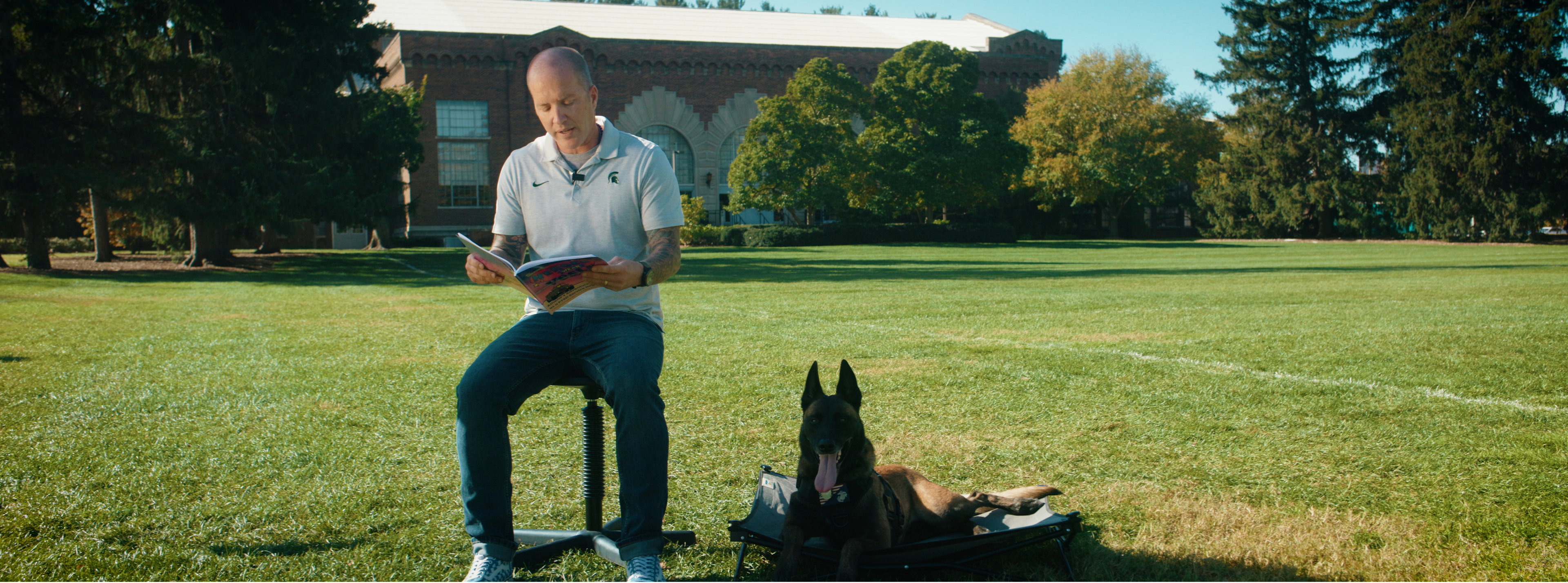
Those pictures and stories grew into “Some Heroes Wear Vests: Athena’s Adventures as a PTSD Service Dog,” a children’s book told from Athena’s perspective.
Writing for children meant finding a way to explain post-traumatic stress without describing the details of his military experiences. Thompson focused on feelings young readers could recognize: being scared, nervous or uneasy.
Athena’s perspective gave him a way to show how support can help someone move through those feelings. It also offered families a starting point for conversations about disabilities that are not immediately visible.
After an adult and child read the book together, Thompson hopes they talk about compassion and recognize that someone’s appearance does not tell their whole story.
Understanding the transition home
Thompson uses another image when talking with his children about returning to civilian life: a duck moving across the water. Above the surface, it appears calm. Underneath, its feet are moving rapidly.
“When I got out, I felt I had everything together,” he said.
Over time, that became harder to maintain. He credits a positive support network with helping him through that period and encourages people to keep checking on the veterans in their lives.
His desire to support others also helped lead him toward social work.
While working as a substance abuse case manager and pursuing a career in law enforcement, Thompson realized he wanted to help people through the longer process of healing.
He eventually found his direction in working with veterans.
That commitment extends to sharing his experiences with students in MSU’s Combat Veterans Certificate program. Hearing directly from veterans gives students an opportunity to understand experiences they may encounter in practice. For Thompson, telling his own story has been part of his healing, too.
The book carries that effort to a younger audience, with Athena helping him explain something he wants adults and children alike to understand: Support can take many different forms.
“What works for one person may not work for another,” Thompson said. “And sometimes the most unique way to get treatment is to color outside the lines.”